
When Amateurism Became Embarrassing
On the word 'amateur' — its Latin root in love, and how American capitalism quietly recast creative work done for love alone as indulgent rather than serious.
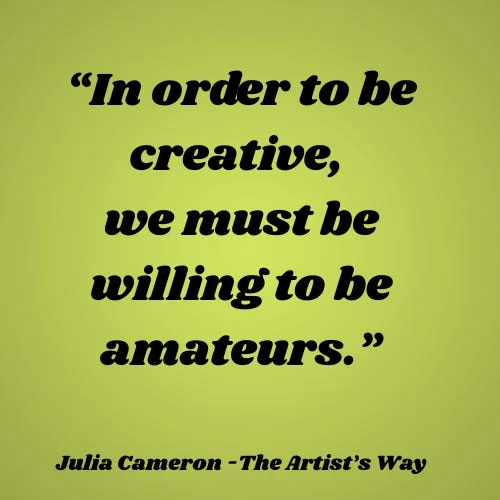
At the first session of every adult art class I teach, I always ask my students:
What made you decide to take this class? Why now?
And in every class, I'll have a few students answer:
- "I am just doing this for fun."
- "I am not an artist, but I love…"
- "It's just (they smile and look down) a hobby."
And after the students share, in every class I say: "You belong here."
Then I tell them what matters is that they turned up and that they are committing their time and energy to their creativity. There is no need to qualify your desire to be here. My agenda is clear: to help them embrace their amateurism.
When said aloud, the word "amateur" usually lands with some confusion when it's offered in this positive light.
There was a time when the word amateur was spoken without apology.
It meant devotion. Care. Love. Amateur comes from the Latin amare — to love. An amateur was someone who made things because they were drawn to them. Not because it led to a greater goal or a financial reward. Folks painted, rehearsed, stitched, wrote — because the act itself mattered.
As an amateur painter myself, the word devotion is precisely what motivates and shapes my visual art projects. Visual art is not my career, nor my central identity. It is something I love to do and am exceedingly proud of.
Without it, I wouldn't be me.
When did "amateur" become embarrassing?
I believe American capitalism intensified the shift by tying personal worth to productivity and pay. Creative work done for love — outside of wages or credentials — was recast as indulgent rather than serious. Even though, for hundreds of years, women, creative artisans, and makers successfully played with craft, art, and amateur pursuits, modern life only glorifies outcome‑focused art making.
Covid times gave us delightful respite from the emphasis on outcome‑oriented creativity, with online "show and share" Instagram feedback. Modern life has intensified the pressure to have a clearly recognizable "creative identity," where even sharing our family photos becomes curated to be consistent with our "personal brand" on social media.
A quick search through YouTube or TikTok reveals how deeply creativity has been commoditized — valued not for love, but for reach, growth, and return. Creativity is legitimized only when it produces income or visibility.
Amateurism therefore becomes an uncomfortable word — even "embarrassing" — not because it lacks discipline, but because it refuses monetization.
A little history
The decline of amateurism coincided with the rise of leisure and the modern middle class in the 19th century. Before industrialization, making was woven into daily life. There was no sharp divide between work and non‑work. Art, music, storytelling, and craft weren't hobbies — they were part of living, part of being human. In many parts of the world, this integration still exists, though it has been steadily eroded by Western industrial and capitalist values.
Industrialization changed how we experienced and thought about our time. Fixed working hours created something new: the concept of free time. Leisure became a separate category — time outside of work. The work/leisure divide, however, excluded not only women but anyone without sufficient income for "leisure time." Women's and many others' work was seen as invisible or illegitimate.
As the middle class grew in America, the concept of leisure became intertwined into much of the culture. Certain activities were encouraged because they signaled refinement or improvement. Others were quietly downgraded.
And I believe this is the moment where amateurism shifted.
I am hoping to inspire all of us to embrace being a joyful amateur with me.
Love, Eliz
- amateurism
- creative life
- teaching
Originally published on Beautiful Art Ache on Substack .