
Magpie Mind & Us Creatives
On chasing shiny new mediums, the term 'magpie mind,' and why curiosity might be a creative superpower instead of a flaw.
Awake too early at 6:20 a.m. (which was 5:20 a.m. pre‑Daylight Saving Time), I find myself awkwardly standing at the end of my dining room table, freezing cold with a blanket loosely draped over my shoulders, intensely examining last night's painting experiment with acrylic inks on Yupo paper.
Grabbing a paintbrush and refusing to move from my spot to put on a proper sweater or raise the heat, I quickly try to reactivate my now‑dried painting — then realize, ugh, I used acrylic ink, and "what's done is done."
Rebounding, I squirt some new vibrant ink blobs onto my makeshift palette (Amazon plastic packaging) and begin trying to layer the bold wet colors onto the paper from the day before, on my now dried and dull‑looking plastic paper.
Unpacking my Magpie adventure
I was going through a hundred or so overlooked saved emails, and found myself clicking and being drawn into a video demonstration from an amazing artist, Randall David Tipton. This Northwest painting genius creates sumptuous layered watercolors and acrylic ink paintings on Yupo paper — paper I had horrible struggles with previously when trying alcohol ink. He showed control, mastery and delight. His demonstration captivated me as he swirled, glopped and erased away watercolors on slick paper. It was like magic.
And just like that, I dove into the learning abyss, changed my schedule, and spent three hours learning, watching, and getting inspired by this artist's work and choice of medium.
My inside thoughts were compelling: "Could this unlock something in me?" My fiery, motivated, get‑it‑done persona snapped into gear. Glued to the laptop, I started taking notes, researching other artists, studying methods, rewatching parts of the original video, and of course cross‑learning from YouTube and Google. AND I went down, down, down — from art‑curious to addictive fervor — until I found myself driving 25 minutes north on the 101 in the rain to buy the new elixir of art supplies at my favorite art supply store.
Back in the car, feeling the guilt fog from overspending, I could barely manage my excitement to get back home and start painting.
"Where energy goes, attention goes." — Tony Robbins
Back at home, I am in full gear — that learning/curious/excited space. It all feels so joyful, so timeless. I begin swirling new bright colors that weirdly hug and stick to the plastic slick paper. Something artistic and new is cracking open and I am riding the wave of wonderment.
Next day. I am tilting my head in disappointment. All the newfound knowledge, curiosity, and energy from the day before — and for this? I look at my painting and feel icky pangs. It feels like an odd hangover.
I get a memory of the term magpie mind and go to the web to search, which reveals a lot of reassuring and worrisome info. Two additional terms pop up: Shiny Object Syndrome and Novelty Loop. I wince at how judgmental and silly the different negative definitions are, and I breathe into my own truth. At 60 years young, I am learning that our cultural bias for incessant self‑improvement often eclipses aspects of ourselves that don't need fixing — these "overdriven" strivings might in fact be ideal for the life I am choosing to live.
What is "Magpie Mind"?
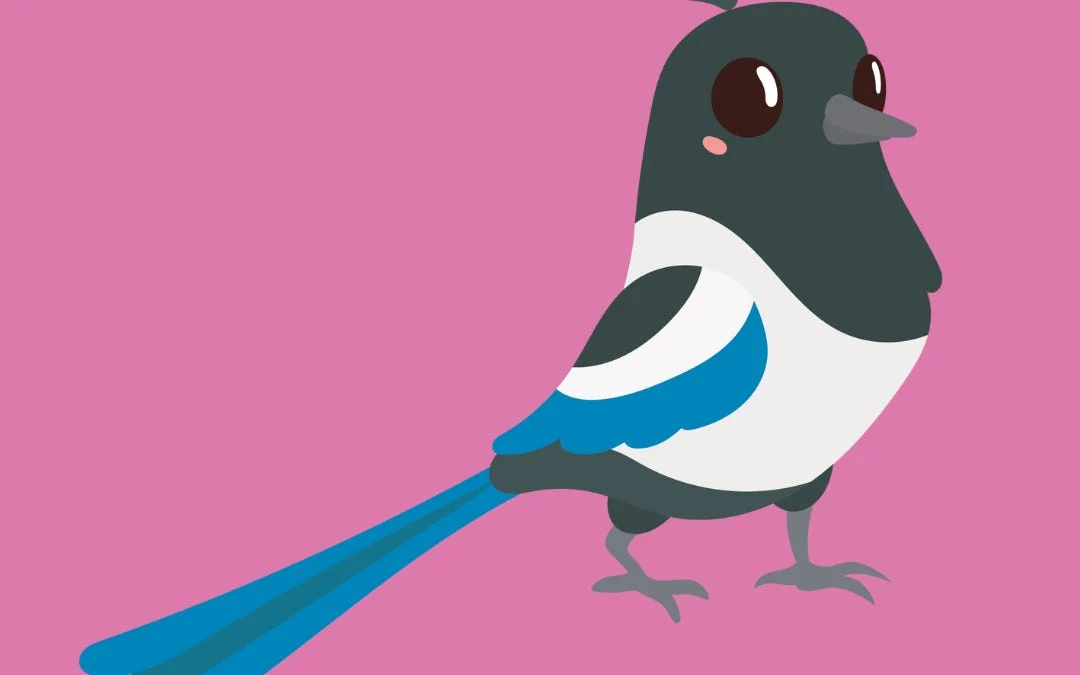
The term "magpie mind" originates from the behavior of magpies, birds known for their tendency to collect shiny or interesting objects.
A magpie mind refers to a mind that is easily distracted, constantly flitting from one idea to another, collecting bits of knowledge, facts, or experiences without necessarily focusing deeply on any single subject. It is often associated with curiosity, creativity, and sometimes a lack of sustained attention.
That description felt unfairly negative — and a little true, but not really the full story for us creatives. Our superpower is the ability to try new things and immerse ourselves in this curiosity behavior. That superpower might just need a little magpie energy to get the curiosity lubricated and flowing.
If magpie minds deliberately choose what to focus on, they can harness their curiosity without losing direction. It's not about ignoring inspiration — it's about learning to channel it. This magpie‑mind tendency can strengthen our artistic practice rather than distract us from it.
Big sigh. Energy flows where attention goes.
After this two‑day adventure, I take a deep breath, reignite my desire for learning more (including embracing my frustrations with acrylic ink), and decide that for now, I will love and embrace my magpie mind.
Can you relate, creatives?
— Elizabeth
- creativity
- mindset
- encore artist
Originally published on Beautiful Art Ache on Substack .