
How a Snarky Insult Launched Impressionism
In 1874 a French art critic mocked Monet's 'Impression, Sunrise' as 'a mere impression.' The Impressionists made the insult their identity — and their power. A small story about flattery, criticism, and learning to listen inwardly.
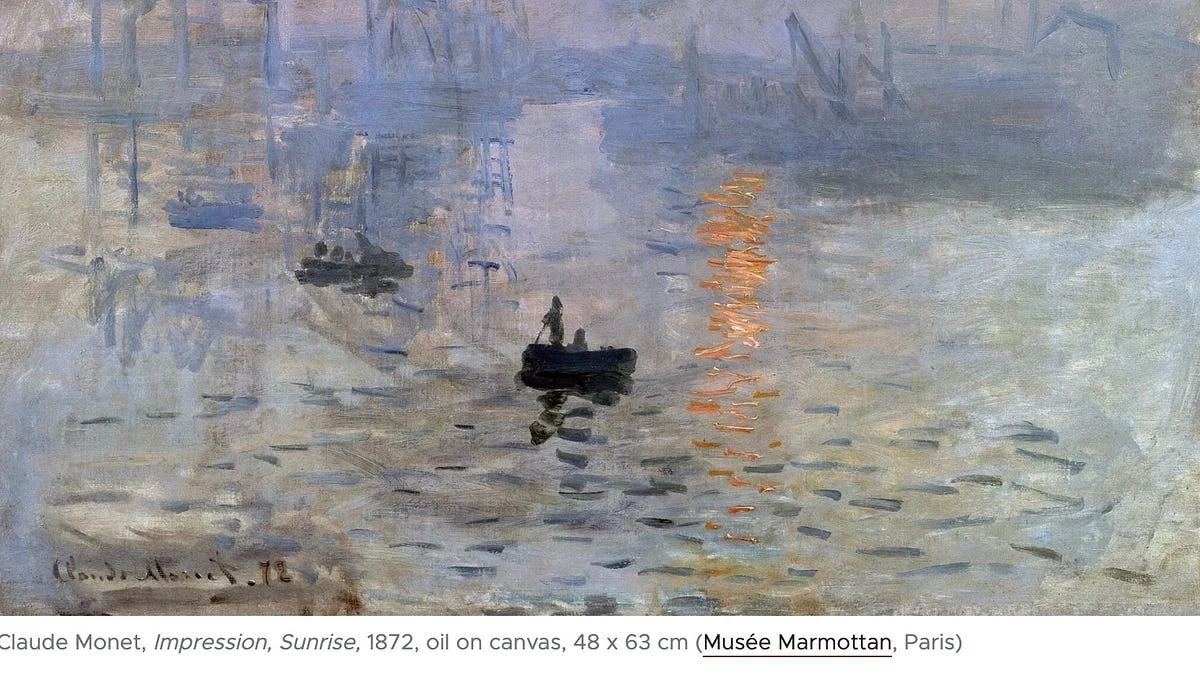
In 1874, a French art critic walked into a small, scrappy exhibition that a group of painters had organized after being rejected by the fancy "French Salon."
Claude Monet was one of the painters in the exhibit, and his luminous, atmospheric, gorgeous painting Impression, Sunrise was hanging proudly on the wall.
The art critic, Louis Leroy, publicly mocked Monet's painting and called it "wallpaper in its embryonic state is more finished than that seascape." And then he said that Monet's picture was nothing but a "mere impression."
BAM. BOOM. TA‑DA.
"Mere impression" was the snarky comment that launched the label Impressionism.
Though obviously intended as a put‑down, it became the creative fuel of defiance and vision that united the group of artists. Within days, this art critic's mockery turned into "The Impressionists." Instead of crushing them, it clarified them. The insult became their identity — and eventually, their power.
Takeaways and applications
As creatives who "show their work" to others, we can often feel painfully vulnerable to external feedback — whether it's flattering or humiliating. Both extremes take us away from knowing, trusting, and believing in ourselves.
The worry over what other people think of our work can shut us down, cause us to lean away from important and exciting learning challenges, and stop us from feeding our artistic journeys.
Praise can artificially inflate us. Criticism can shrink us.
Learning not to give others the power to lift us up, or put us down, is the true lesson.
The Impressionists learned to listen inwardly. They learned to keep painting the way the world felt to them, not the way the establishment wanted them to behave. And they did it together — creating a circle of support, experimentation, and shared courage that insulated them from the worst of the reviews. So many of us need and thrive when we're in supportive communities.
It isn't easy to have the "Teflon" necessary to make art.
My own takeaway from this story is realizing how much I have positively surrounded myself with a supportive artistic community, and thus protected myself from relying on external feedback. This has helped me grow and learn enormously over the last few years. Writing for the Substack platform has also made me feel stronger and freer as an artist and educator.
A small story: the art show that wasn't
Here is my own small story, where I was forced to develop a protective layer to feeling unvalued. It connects to the Impressionist story.
Last year I submitted a series of paintings for a juried Open Studio art show — and I was accepted.
It felt so good. I felt so legitimized.
Immediately following the acceptance, I felt a surge of inspiration to create. I was prolific, joyful, and expansive. The feeling of being accepted gave me confidence and energy. I was ready to hang and market my art for the Open Studio show.
I went all out and ordered hundreds of glossy postcards, posters, and had a social media schedule ready to go. This was exactly what I needed — I was thrilled to sell my work and give the paintings to loving homes.
Unfortunately, during this two full‑weekend show, while a few people toured my space and attended my demo, I didn't sell a single painting. (Except for my mom — and that doesn't count.)
I had worked so hard to get the show up.
I was so disappointed. It smacked of pure rejection. It took me many months to want to paint again.
I am sharing this story in hopes that it might resonate with you — this is what it is to be an artist and to be willing to share one's work publicly.
As artists, we can choose to be seen publicly or not, but if you, like me, want to learn how to develop thicker skin and believe in yourself as a creator, we have to take the pain with the passion.
These artists didn't rise as a group because the world saw their genius at first. They flourished because they trusted: their intuition, their art, and their community.
"Impressionism democratized beauty. It taught the world to value the everyday, the ordinary, and the overlooked."
Can you relate to this story? Have you ever felt your art was judged? How did this impact you?
Love, Eliz
- art history
- impressionism
- creative life
Originally published on Beautiful Art Ache on Substack .