
Georgia O'Keeffe's Playbook — Applying Her Pages
'I have already settled it for myself, so flattery and criticism go down the same drain and I am quite free.' On NYC auditions, art-show rejections, and learning to let both sides go down the same drain.
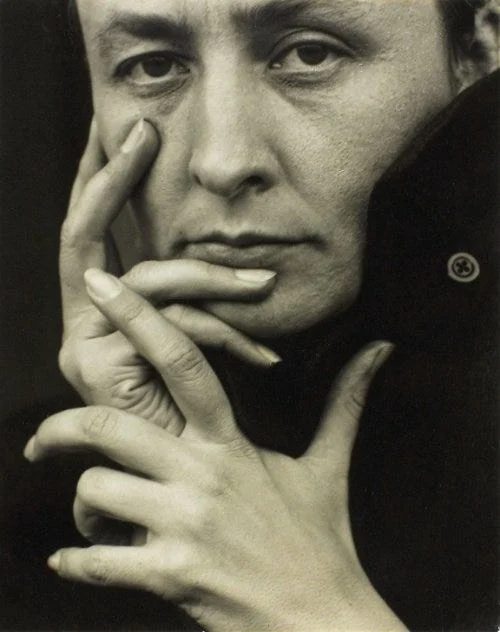
"I have already settled it for myself, so flattery and criticism go down the same drain and I am quite free." — Georgia O'Keeffe
So true, Georgia. As a visual artist today, and as a young aspiring actress 25 years ago, I wish I had learned this imperative lesson regarding external feedback. My early years auditioning in NYC initiated me into the powerless world of needing other people to make me feel worthy as an artist. That early experience set the stage for a critical lifelong lesson — in visual art, theatre, and life.
NYC, 1988
The repeated sting and waves of shame would hit me the moment I'd arrive at the dingy audition location, where I would sign in and wait. And wait. All of my uniqueness, my degrees, special training, and inner light would blur into a puddle of insecurities about how I looked, my talent, and thoughts about wasting my life in the theatre. Auditions were the worst, most humiliating experience imaginable.
So began my early artistic professional life in 1988 in NYC.
A middle‑aged stage manager, clutching a clipboard, would meet you somewhere in the vague and crowded audition‑hall space, and perfunctorily nod for you to walk vulnerably onto an empty stage and find your "mark" — a taped letter X on a dusty, barren stage. We'd wait in small groups (note: the ratio of women to men auditioning was something like 10:1). We'd wait without benches or chairs in cold and drafty hallways, while clutching our hopeful glossy headshots and endlessly re‑worked résumés in the cup of our hands. The time spent waiting in the hallway was torture. You'd hear amazing voices singing ahead of you, and you'd never know exactly where to look (pre‑smartphones). I would try to avoid staring at the massively intimidating, long‑legged dancer women who would stretch and show off their insane flexibility in the halls while waiting.
I'd finally be called, land on my X, and my lower back would start to sweat profusely while I'd try to pull in my stomach and pray that the diet deviation the night before wouldn't punish me with a swollen belly. Wearing only tights, high‑cut 1980s leotards, and impossible‑to‑truly‑dance‑in heeled "character shoes."
All of this for a few minutes to audition: learn a 1–2 minute dance combo, sing a song, and sometimes — if you were supremely lucky — be asked to act out a monologue. I was a classic, naive, under‑employed, eager musical theatre actress. Increasing the pressure and weirdness was the panel of exclusively male judges who sat far enough away from the stage to make us feel extra painfully inadequate, worsened by the darkness and vast space between us. These men held the power in their hands as they glanced at your headshot/résumé and could determine your future. This was pure sanctioned cultural evaluation and objectification. It always felt terrible and wrong, but it was also the only route to getting cast in a show.
The worst part of this requisite process was actually the day after the first audition — having to hold weeks and possibly months in your calendar as potential future performance dates (if you got lucky and passed the next round).
More waiting for someone to want you, to feel you were good enough.
This waiting for a "callback" felt like daggers to my core. We had to wait through agonizing days without a clear deadline. We'd only really know the next step when someone we knew got the call we didn't. And then, we'd be forced to give up hope, but try to get excited to prepare for the next new audition.
When I started running the auditions
When I finally gave up acting 10 years later and transitioned to being a director of theatre, I began hosting and running auditions myself. I tried with every ounce of heart and integrity to change the power dynamics and the objectification vibes when actors auditioned.
And then visual art
Seventeen years later, when I transitioned to becoming a visual artist, the two‑headed monster of flattery and criticism returned. Submitting for art shows felt eerily similar to auditioning. The emails following submission to art shows often led with "unfortunately" in the preview window in my Gmail inbox. The gut feeling of not being chosen felt exactly the same as when I auditioned in NYC. Even after getting chosen for an art show, it was so hard to watch people casually stroll around and look cursorily at my paintings, or ask questions about my work but not make a purchase.
It felt just like the same artistic rejection. Again. Ouch.
And then — on the flip side — the flattery gush. The time when a patron ran into my art studio, announced she was my fan, and had traveled distances to see my art in person. She was so genuinely excited to meet me live and see the person who had created one of my paintings. She kept talking about her amazement at the texture, color, and composition of one painting. I radiated joy. Last spring, one of my fine‑art jewelry bracelets sold in a new gallery. For the next 12 hours I felt giddy and invincible.
Down the same drain
Here's the thing — flattery and criticism need to go down the same drain.
Just as Georgia O'Keeffe tells us.
We have to let go of both sides of giving others so much power. Today I choose to summon the practical wisdom of Georgia O'Keeffe as I continue my path as an Encore Artist.
Freedom is worth it.
- georgia o'keeffe
- creative life
- feedback
Originally published on Beautiful Art Ache on Substack .